Will a Smart Sprinkler Controller Work With Your Valves? Rachio, Orbit, and Rain Bird Compared
· HomeTechPulse

Short answer: a smart sprinkler controller will usually replace a conventional in-ground irrigation timer when the system uses 24VAC solenoid valves, one shared common conductor, and one switched conductor per zone. The purchase becomes less straightforward when you have a pump, master valve, more zones than the controller supports, a shared common between two controllers, an unusual sensor, or no reliable Wi-Fi at the mounting location.
This guide compares the documented connection paths for the Rachio 3, Orbit B-hyve XR, and Rain Bird ARC8. It is a documentation-based comparison, not a hands-on review. Specifications and support pages were checked on November 4, 2026.
Safety first: unplug or de-energize the old timer before moving conductors. Photograph and label every terminal. The controller operates low-voltage valves, but its power supply, a pump circuit, or outdoor wiring can involve mains electricity. Follow local electrical and irrigation codes; use a licensed professional when the power, pump relay, or existing wiring is unclear.
The seven parts of the connection path
“Works with my sprinkler system” is not one compatibility question. It is seven smaller questions. Separating the roles makes a failed installation much easier to predict.
| Role | What it does | What to verify |
|---|---|---|
| Controller | Switches each watering zone and runs schedules | Exact model, zone count, indoor/outdoor rating |
| Transformer | Supplies the controller and valve circuit | Input voltage for your country and documented 24VAC output |
| Zone valve | Opens when its solenoid receives power | Conventional 24VAC solenoid, not a DC latching or proprietary valve |
| Common and zone wires | Complete the low-voltage circuit | One common plus one conductor for every active zone |
| Master valve or pump relay | Starts the water source alongside a zone | Dedicated terminal and a correctly specified relay; never drive a pump motor from a valve terminal |
| Sensor | Can pause watering or report flow | Sensor type and the exact terminals supported by the controller |
| App and weather service | Add remote control and forecast-based adjustments | Wi-Fi band, account, cloud availability, location data, and any current service terms |
Rachio’s wiring explanation describes the normal valve circuit clearly: one solenoid lead returns to the shared common and the other lead goes to that valve’s zone terminal. Orbit documents the same basic mapping for B-hyve XR. That common pattern is why many standard residential systems can move between brands without replacing the buried valves.
Exact-model comparison
| Controller | Documented path | Important requirements | Limits and extras to budget for |
|---|---|---|---|
| Rachio 3 8- or 16-zone model | Included AC adapter → controller → common plus zone terminals → 24VAC valves. M terminal can operate a master valve or an external pump relay. | 2.4 or 5GHz Wi-Fi; 14–22 AWG field wiring; Rachio app for setup. Supports normally closed rain/soil sensors and documented wired flow sensors. | Outdoor installation needs the separate weatherproof enclosure. A shared common or master/pump circuit across two controllers may need an isolator. App use has no monthly fee, while some optional enhancements are one-time purchases. |
| Orbit B-hyve XR 57985 8-zone or 57995 16-zone | Internal transformer → COMMON and numbered zone terminals → valves. PUMP terminal plus common can operate a master valve or pump-start relay alongside a zone. | 120VAC input version, 24VAC output; 2.4 or 5GHz Wi-Fi and Bluetooth 5.0. Orbit lists compatibility with most rain/freeze sensors. | Choose the correct 8- or 16-zone SKU. A pump still requires the appropriate relay. Forecast-based features depend on location/weather data; a personal weather station has separate setup requirements. |
| Rain Bird ARC8 C53114, 8 stations | 120VAC controller → common plus eight station terminals → 24VAC valves. Dedicated master-valve/pump-start and rain-sensor connections are provided. | 2.4GHz 802.11b/g/n Wi-Fi; indoor/outdoor mounting; app for advanced remote and weather features. Local controls provide basic operation at the cabinet. | Eight stations only. The manual says no more than one valve on a station terminal and no more than one valve on the master terminal. A pump needs a pump-start relay; local operation is not a substitute for checking which cloud features need Wi-Fi. |
Do not treat “120V” on these North American product pages as universal. It describes the controller’s input version, not the buried valve voltage. Confirm the exact regional SKU and transformer before buying outside a 120V market.
A worked six-zone replacement
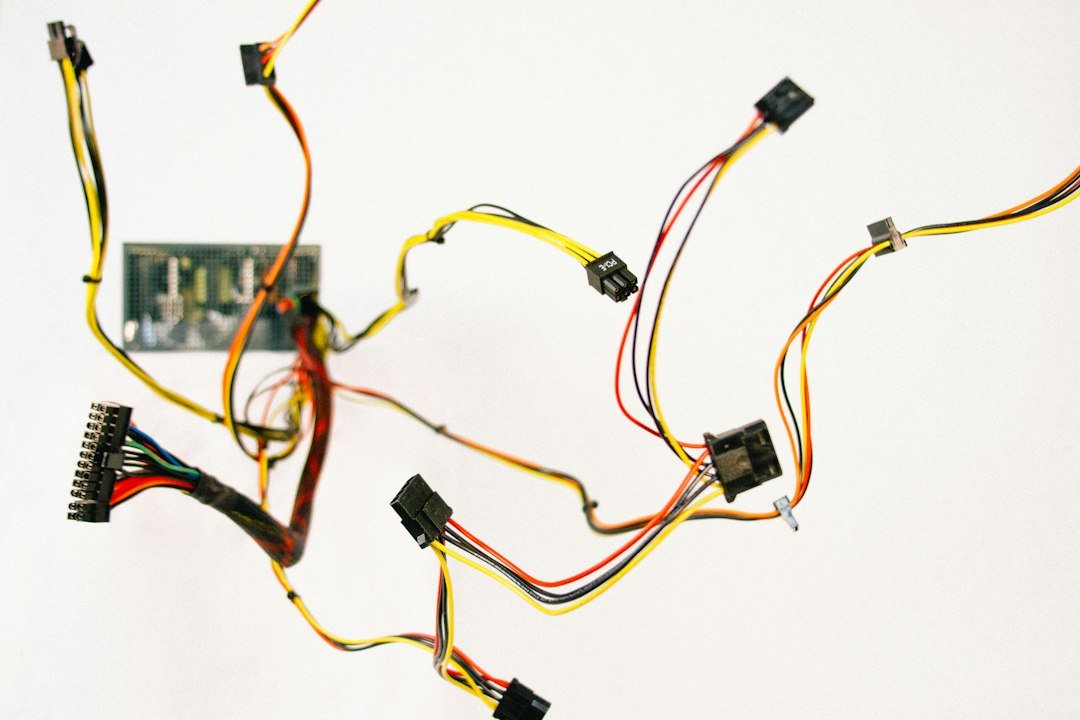
Consider a documented, hypothetical system with six active lawn zones, one master valve, and a normally closed rain sensor. The old timer has conductors on C, 1, 2, 3, 4, 5, 6, and MV/P, plus two sensor leads. There are no conductors on zones 7 or 8.
| Existing function | Rachio 3 | Orbit B-hyve XR | Rain Bird ARC8 |
|---|---|---|---|
| Shared valve return | C | COMMON | C |
| Six individual valves | Zones 1–6 | Zones 1–6 | Stations 1–6 |
| Master valve | M | PUMP | M |
| Rain sensor | Sensor terminals for a supported normally closed sensor | Sensor terminals; verify the sensor model | SENSOR terminals; follow the ARC8 manual |
| Spare capacity | Two on an 8-zone model | Two on model 57985 | Two |
The expected result is straightforward: a manual test of zones 1 through 6 should open one valve at a time, and the master valve should operate with every active zone. If all six zones work but the master valve does not, stop changing schedules—the problem is in the master-valve path, terminal assignment, or field wiring. If no zone works, inspect the shared elements first: controller power, common conductor, and master/pump path.
This mapping assumes the old labels accurately describe the field wiring. It does not prove that a solenoid is 24VAC or that the sensor is supported. Photographing the original terminal strip and reading the old controller’s label are part of the compatibility check, not optional cleanup.
Model notes that change the buying decision
Rachio 3: flexible Wi-Fi, but outdoor mounting costs extra
Rachio’s controller specifications document 2.4 and 5GHz Wi-Fi, the included 24VAC 850mA transformer, 14–22 AWG wiring, master-valve/pump-relay support, normally closed sensor inputs, and compatible wired flow sensors. The controller itself is not the outdoor enclosure; include that accessory in an outdoor replacement budget.
Rachio’s shared-common guidance matters in larger yards. Two controllers cannot simply share a common or master/pump connection as though they were one controller; the documented remedy may require isolation hardware. If your old cabinet contains wires bridging two timers, do not assume a normal one-box swap.
Weather Intelligence Plus can apply rain, wind, freeze, and saturation skips using weather data. That is a software layer above the valve circuit: it cannot correct a misidentified common wire or an underspecified pump relay.
Orbit B-hyve XR: two exact zone counts and an outdoor cabinet
Orbit’s B-hyve XR specifications list the 8-zone 57985 and 16-zone 57995 versions, indoor/outdoor use, 120VAC input, 24VAC output, 2.4/5GHz Wi-Fi, Bluetooth 5.0, rain/freeze-sensor support, and a master-valve/pump terminal. Buy for the active zone count plus realistic expansion—not the number of sprinkler heads.
Orbit’s installation pages show the specific conductor path: one solenoid lead joins the common and the other goes to a numbered station. For a master valve or pump-start relay, the control wire lands on PUMP with the return on common. The terminal is a control output; it is not a supply for a pump motor.
Weather-based scheduling can use forecast data, and Orbit documents a separate path for connecting a personal weather station. Treat that as an optional data source with its own account and setup requirements, not as hardware included with the timer.
Rain Bird ARC8: local cabinet controls plus an eight-station ceiling
The ARC8 product specification lists eight stations, indoor/outdoor mounting, a master-valve/pump-start connection, rain/rain-freeze sensor input, three programs with four start times per program, weather-based seasonal adjustment, and 2.4GHz Wi-Fi. The cabinet retains basic local controls, which can be useful when a phone is unavailable.
The official ARC8 manual sets a particularly clear wiring limit: do not connect more than one valve to any station terminal or more than one valve to the master terminal. A yard with doubled-up zone conductors needs redesign or professional assessment, not a copied terminal arrangement.
Eight checks before ordering
- Photograph the old terminal strip. Capture every label, jumper, unused conductor, sensor lead, and transformer rating before disconnecting anything.
- Count active zones, not lawn areas. Each conductor on a numbered terminal normally represents a controlled circuit. Leave capacity for a planned expansion.
- Confirm the valve type. These three controllers are intended for conventional 24VAC irrigation valves. A hose timer, DC latching valve, two-wire decoder system, or proprietary controller is a different architecture.
- Identify C, MV/P, and sensor wires. A bundle with no obvious common, two timers sharing field wiring, or an unexplained relay is a reason to pause.
- Trace the water-source control. A master valve can be a 24VAC valve; a pump motor needs an appropriately rated pump-start relay. Never connect the motor directly to the controller.
- Check mounting and power. Rachio 3 needs a separate outdoor enclosure; B-hyve XR and ARC8 have documented indoor/outdoor cabinets. Still follow the required mounting, clearances, receptacle, and code rules.
- Test Wi-Fi at the cabinet. Rachio and B-hyve XR support 2.4 and 5GHz; ARC8 specifies 2.4GHz. A phone showing bars is useful but not proof that the controller will maintain a stable cloud connection.
- List every extra and service assumption. Outdoor enclosure, rain/flow sensor, pump relay, isolation hardware, electrical work, and a weather-station account can change the real cost. If an official page does not state a service price, treat it as unknown—not zero.
Completed diagnostic example: one zone is silent
Suppose the six-zone replacement above is commissioned. Zones 1, 2, 4, 5, and 6 run, the master valve operates, but zone 3 never waters. This is a hypothetical diagnostic example, not a report of field testing.
| Check | Expected outcome | Next decision if it fails |
|---|---|---|
| Run zone 3 manually from the controller | The controller indicates the zone is active | If it will not start, correct the zone assignment or disabled-zone setting before touching wiring |
| Compare the zone 3 terminal with the pre-swap photograph | The same identified conductor is fully seated | De-energize the controller, reseat the correct conductor, then retest |
| Compare with working zones | Common path and master valve are already proven by the other zones | Focus on zone 3’s conductor, splice, and solenoid rather than resetting the router |
| Have the field circuit tested safely | The conductor and solenoid meet the controller/manual’s electrical expectations | Repair the field wire or replace the verified faulty solenoid; call an irrigation professional if testing is unfamiliar |
The key inference is scope: because five zones and the master valve work, the shared power, common, and water-source path are probably not the first suspects. Conversely, if no zone opens, investigate those shared components before replacing six solenoids.
What happens when the internet is down?
Do not reduce this to “smart controllers work offline.” Local behavior, saved schedules, manual cabinet controls, weather updates, alerts, and remote access are separate features and vary by product and firmware. ARC8 documents basic local cabinet operation; the Rachio and B-hyve experiences center more heavily on their apps. Read the current manual for the exact model and decide which functions must survive an outage.
For a wider resilience plan, use our smart-home power-outage checklist. If the cabinet’s Wi-Fi is weak or you are changing network equipment, follow the router-replacement reconnection plan. And if your goal is automatic water protection rather than landscape irrigation, compare the different roles in our leak-sensor and shutoff-valve guide.
Bottom line
Choose the controller only after you can draw the full path from transformer to controller, common and zone conductors, valve solenoids, and any master valve or pump relay. For a straightforward eight-zone 24VAC system, all three models can fit on paper. Rachio 3 is the most explicit about its app and weather ecosystem but needs an outdoor enclosure; B-hyve XR offers 8- and 16-zone indoor/outdoor models with dual-band Wi-Fi; ARC8 combines an outdoor-rated eight-station cabinet with basic local controls and particularly clear one-valve-per-terminal limits.
The right next decision is simple: if every wire and accessory maps to a documented terminal, buy the exact regional SKU and retain the pre-swap record. If the old system has shared commons, doubled-up valves, a pump with no identifiable relay, non-24VAC equipment, or unexplained wiring, pause the purchase and have the system identified first.
Leave a Reply